North & South & Infogrames
~4 min read
Jump to end ↓
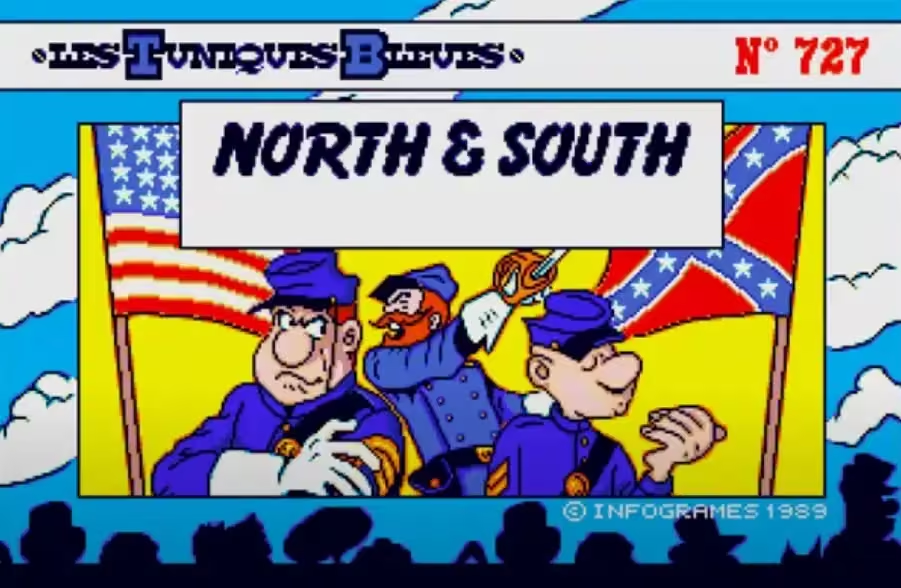
North & South, released in 1989 by Infogrames, isn’t widely known in the U.S. This game and its developer had a significant impact on me both as a gamer and professionally.
Infogrames
Infogrames was a powerhouse French video game publisher and developer of the late 1980s and 1990s, leaving a lasting mark in history despite its collapse in the 2000s. This company holds a special place in my heart for three key reasons:
- A legacy of IPs and acquisition: During its peak, Infogrames acquired numerous companies ( Ocean, Atari and GT Interactive), amassing a vast portfolio of intellectual properties (IPs). Even after its bankruptcy in 2013, many of these IPs either remained with the company (now rebranded as Atari) or were scattered across the industry. For example, Total Annihilation was sold to Wargaming.
- Pioneering Video Games in France: They spearheaded video games in France, and particularly in the city of Lyon. Its influence persists through studios like Eden Games or Ivory Towers. Even Electronic Arts has an office in the city.
- A Network That Launched My Career: Lots of people worked there in France and I got my start in the industry because of one of them. At the time I was working at a start-up in Marseille (far from games) with a project manager ( Benoit Arribart who also has terrific stories about Widescreen Games, I let you read the link) just pushing me one day to candidate to a position at Ubisoft Annecy and he knew the hiring manager ( Franck Maestre, ex-Infogrames). I got the job. On a side note just to demonstrate how this industry is small: Rebecka Coutaz who was the General Manager of this studio, also ex-Infogrames, is now the General Manager of the European Battlefield studios. You have this everywhere, ex-Riot, ex-Blizzard is a thing here in LA.
I am still looking from time to time where my favourite IPs are disseminated, hoping for remakes or new games. North & South for example got a recent IOS port and a PC remake.
The Game
The setting is inspired by the American Civil War. But those cartoon characters, on the front picture, are from the bestselling French Cartoon The Bluecoats. It has this characteristic humour of the Franco-Belgian comics cartoon style that you can find in Tintin and others. It is a very French tone over an American classic and that’s fun. Infogrames is also very well known for publishing another famous cartoon adaptation to video-game: Asterix & Obelix XXL.
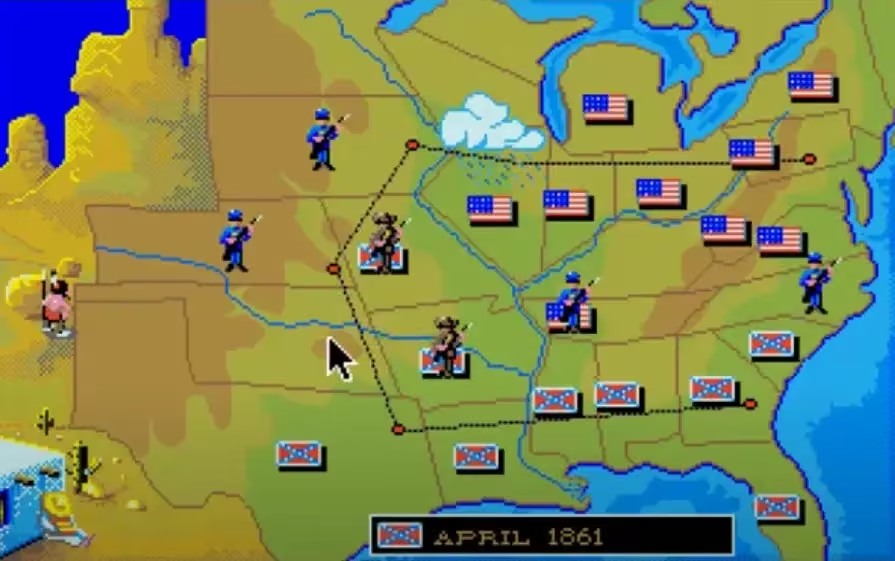
The game’s core revolves around 2 factions: the Union and the Confederate. You can play hot-seat for 2 players, each playing a faction. I mostly played this way with my cousin. The main phase of the game is about moving troops on a map, triggering events that leads to mini game like storming a fort, raiding a moving train or just a good old classic open field battle.
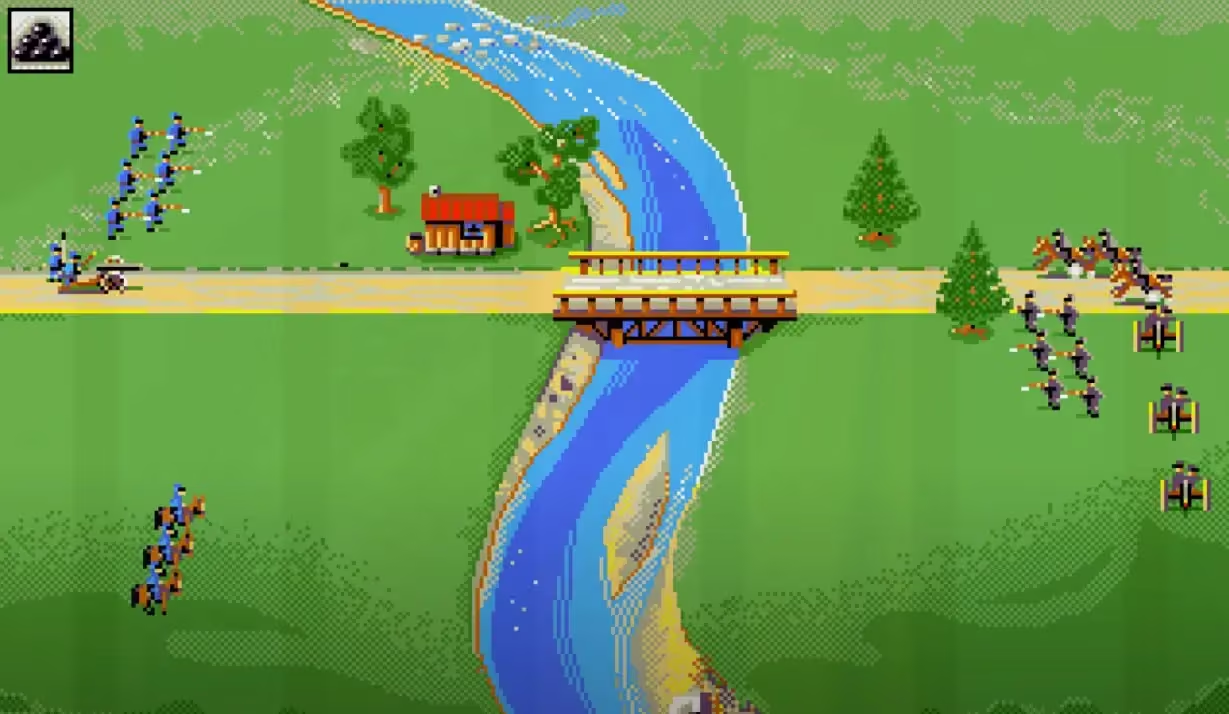
I played this on Amiga 500 around 1995. At the time (in 1989), video games were still trying to find their identity. It would be hard to categorize this with a modern genre. The developers just put a mix of experiences matching the themes and the fantasy of the cartoon. It honestly worked very well. Later on, I played Ultimate General: Gettysburg just to find the thrill of the battles I fought when I was 7 years old, 2pixels for each soldier and a lot of imaginations. I warmly advise my readers to buy those Ultimate General games, the studio is Ukrainian and had to pause all their development because of the war.
It is a short game but it is replayable because of the multiplayer. At the time, we were playing a lot of those hot-seat games but that’s a story for another time.
Regional Industry Matters
It underscores the value of local industries in nurturing young talent. In France, we were fortunate to have pioneers like Infogrames and later Ubisoft, which opened doors for aspiring developers. Without Ubisoft’s annual hiring of junior developers, I likely wouldn’t be working in this field today. Some may cynically argue that companies exploit young talent, and there’s a grain of truth there, but everyone needs a starting point. Without these opportunities, there would be far fewer French game developers, whether working in France or abroad. This principle applies universally, across countries and industries.
Every game studio I’ve visited or worked at operates uniquely. Whether in Paris, Lyon, or Montpellier, each has its own approach and culture. The same goes for Montreal, Vancouver, or Los Angeles. Distinct cultures shape everything from game design to technology, Conway’s law in action. It is a clear example of why it is important to have a wide diversity of studios across the globe. It just makes the video-game landscape more interesting, for design and for technology. In this case, an American’s Civil War game with French humour and style. Not bad.