Run Malibu 2025
~6 min read
Jump to end ↓
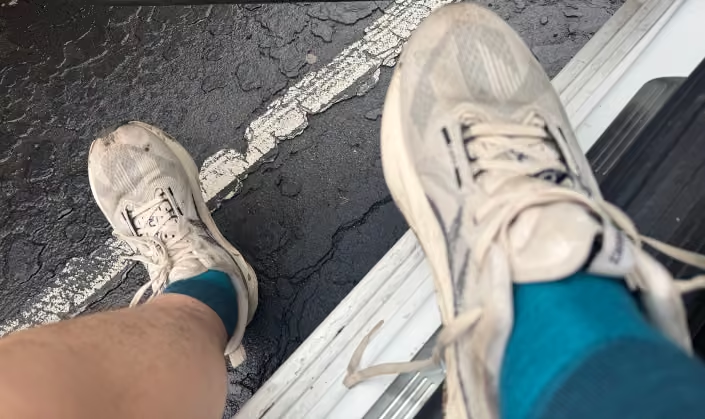
Despite a terrible rainy weather, I ran my first ever Half-Marathon this week-end in Malibu.
The results
For the impatients:
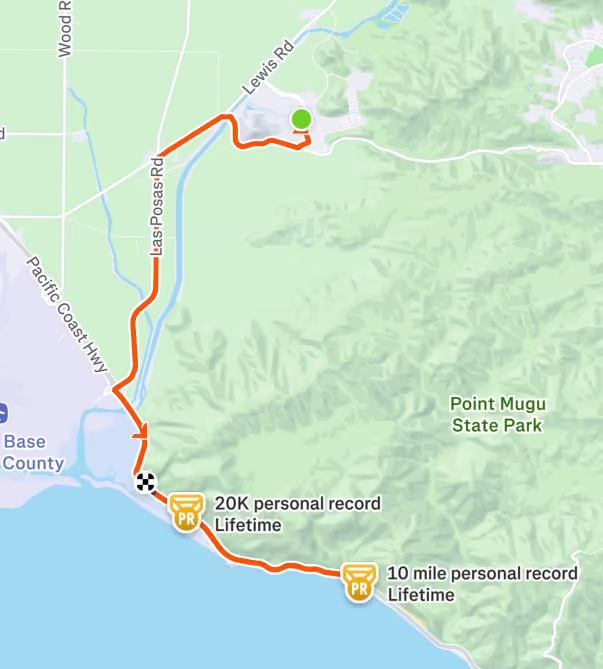
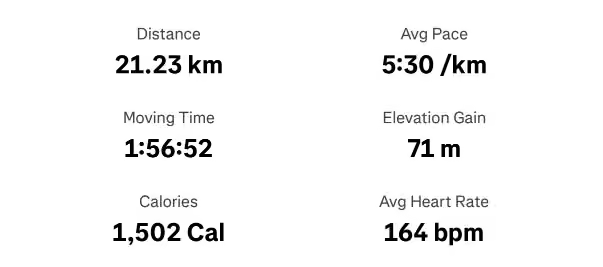
Very happy for those stats, definitely burnt some calories. Let me babble a little bit now.
The Canceled 5K
I was pretty excited for this November weekend. The plan was to run a 5k on Saturday with two of my good friends. They had really committed to it, training for about a month to get ready. Unfortunately, the organizers had to cancel the event at the last minute because of the severe weather. From what I understand, the race route through the local university’s campus was the primary issue. It was a major disappointment, especially for my friends who had worked for it. But, I’ve made a promise to them that we will run a race together. Our next goal is certainly the Rose Bowl Half.
Training & Strategy
Sunday was my main event. I have been training for the last 3 months now but never ran the distance. I peaked at 14km (a Half is 21km). I would run 1h very slowly, zone 2 (135bpm). Then, I would finish my session by a HIT serie of 30 minutes. So it is 1h30 of running for a bit less of 14km. I was trying to work my cardio while tired. Therefor, I was not particularly scared of the distance, I knew I could sustain it.
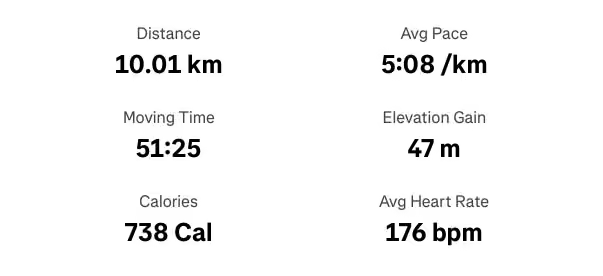
My training, however, was almost entirely on a treadmill. It is why I am very conscious about heart rate and speed. I only trained in a controled environment! Transitioning to a weekly 10k outdoor run in the final month proved to be a psychological battle. These runs were maximum-effort sessions, holding a steady 180bpm for 50 minutes to achieve a 5:00/km pace.
My breakthrough came from an unexpected place. As a self-taught runner, I consume a lot of content, but I had/have a lot of blindside. A lot of those coaches speak about Zone 2 and easy runs. It is only after reading Jordan Rapp in the Norseman mentionning it than it hits me. I could run any pace based on my heart rate! (it feels so dumb writing this).
Example of a 180bpm run:
Then something magical happened. I went for an easy outside run the week of the race, just to get some mileage under me.
I aimed to run at 160bpm max (first time!).
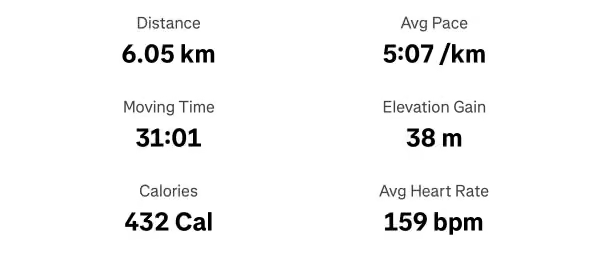
As you can see, the performance is nearly identical to my max-effort runs, but with a significantly lower perceived effort. The key difference wasn’t a sudden jump in fitness; it was the pacing. Instead of starting at a frantic 4:30/km pace, I began slowly, allowing my body to warm up before locking in at 160bpm. This allowed for far greater efficiency and proved to be a game-changing realization right before the race.
The Half-Marathon, Race day
I tried to repeat this strategy for the race. I started by targeting 150bpm, but the initial race-starts chaos meant my effort was a bit varied as I wove through slower runners.
Sadly if you look at the pace, I was significantely slower, from 5:06 to 5:30.
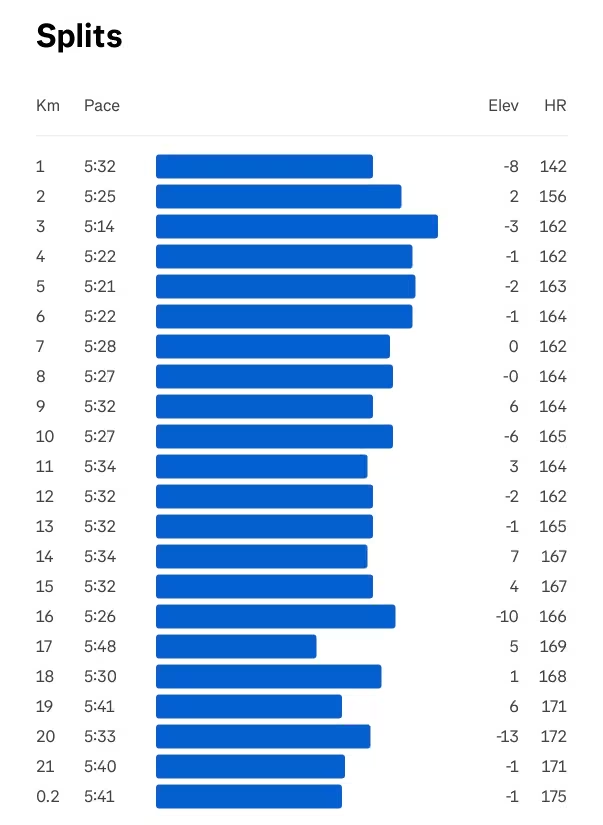
I was certainly more tired, I had to wake up at 5am to drive to the event and my night was pretty much sleepless. Nevertheless, that was what my body would give me on the day, no point pushing it. But the science still works, notice how constant my pace is through the race. I am extremely happy with this consistency.
Let’s check my heart rate:
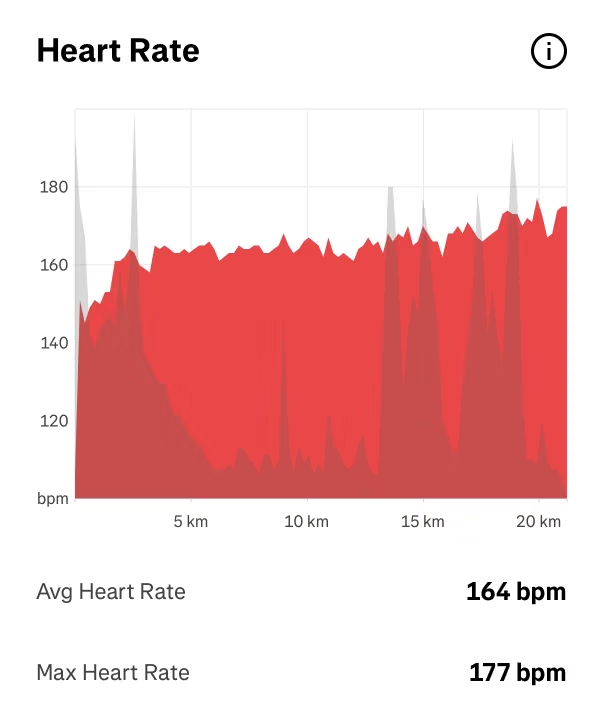
Here also, it is very steady, and in control. It was a bit hilly and windy along the Pacific Highay but with first class ocean view.
The (near) Injury
For this race, I had a very signified pain in the right hip at the starts of kilometer 5. It is not unheard of but I was surprised by it. My Psoas Major is most of the time where I am hurt. It creates very annoying pain under my abs, near the groin. But this hip pain, particularly starting at this distance is new. And I think it is just showing how much of a noob roadrunner I am.
Indeed, a lot of the road is a bit concave (it turns a lot). So my right side has a slight inclination. The pain caused by this repeatitive stress just show I am just not conditioned for uneven terrain because of my flat little treadmill. I already said I am going to run more outside ok.
The Gear
-
Base Layer: Ortovox Merino Wool. This was the MVP of the day. It’s a backcountry skiing piece my dad gave me (80% wool), and it was perfect for the rain. Even when soaked, the merino wool kept me warm, and its breathability was a huge plus.
-
Rain Jacket: Patagonia Rain Shield (unused). I ended up just carrying it. It’s incredibly light, but it has zero breathability. For high-output running, it’s basically useless.
-
A pair of Asics Novablast 5. They have a little bounce that makes running feel fun.
-
Socks: Darn Tough Merino Wool. Sticking with the wool theme, these socks were a perfect choice. No blisters, no cold feet—they just feel right, especially with wet shoes since the first km.
-
Headwear: REI Cap. I did not notice the rain and it soaked so much water when I removed it, it poured water everywhere.
-
Fuel: 2 Gels. One before the start, and one at kilometer 16. Now that I am more fit, I need to eat before exercicing or I am dizzy. A gel, with cafeine is enough to give you the necessary kick.
-
Watch: Apple Watch Ultra 3. It is just very useful to get the data you need to adapt your strategy: bpm and instant pace. I certainly looked at it too much and I should learn to trust my body more. But for this particular distance I had no point of reference. The watch is a must have. Also the weather app is very good. It would tell me how long the rain would fall and when.
What’s Next
Ultimately, I’m walking away from my first half-marathon feeling happy and motivated. The path forward is clear:
- Get Faster: My HIT sessions need a serious intensity boost. My current routine is too easy.
- Build Resilience: For the next long race, I’ll prepare by running the full distance multiple times in training.
I am disapointed to not have been able to test myself on 5k. That’s what the interval sessions will prepare me for. Mecanically my 10k will become faster too. The Half Marathon does not particularly interest me but it is still fun nevertheless.
Thank you for reading.