A Month of Fitness
~14 min read
Jump to end ↓
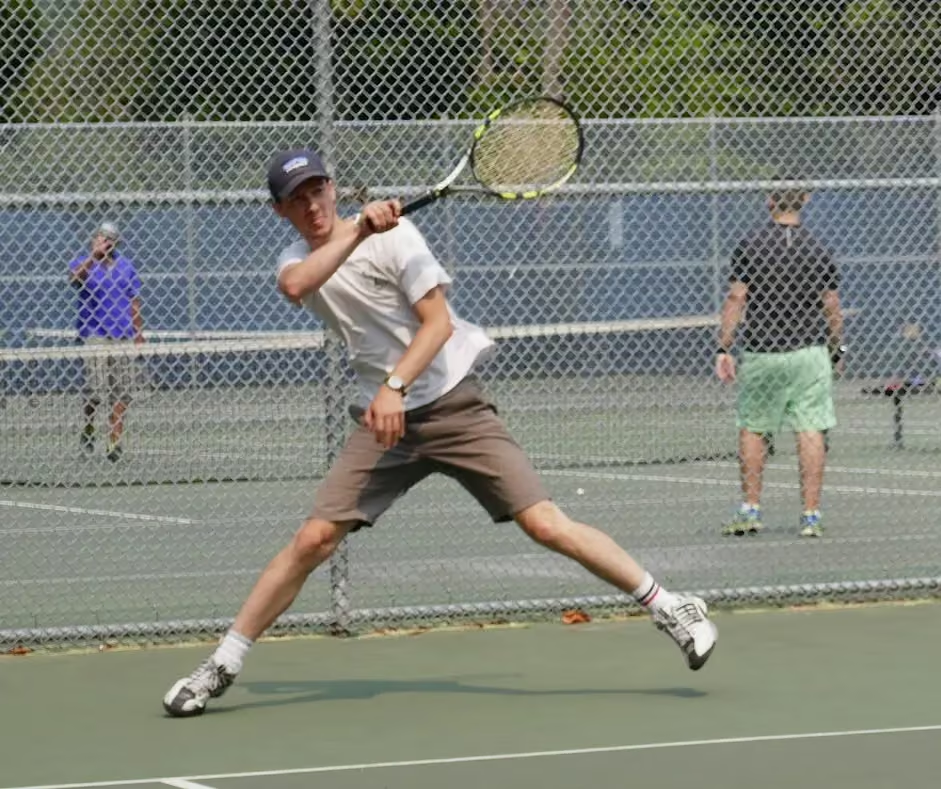
I spent the last month training endurance and strength combining multiple sports to avoid injuries. This time, I swear I will get fit.
If you want to skip the origin story (I will judge you but you will survive), go here.
The Parents
I have been surrounded by sports my entire life. My parents are dedicated alpinists, and our family life revolved around mountain sports: climbing, biking, hiking, skiing. My childhood wasn’t spent in cities, but on van trips across Europe, to Norway (I walked for the first time in a museum there), Scotland, Corsica, Greece, driving from one mountain range to the next. As professors, my parents had the same long vacations as my sister and me, so my youth was spent on the road, living out of a truck.
Back then, I resented it. It wasn’t until my thirties that I returned to climbing, and only then did I finally understand why. I ended up becoming an engineer. I thrive on technical details and the process of mastering skills. My parents, however, approached the mountains with a different philosophy. For them, it was about the ‘vibe’, the adventure, the experience of being in nature. It was a soft, almost hippy-ish view of life. They never focused on technique. My reconnection with climbing came through the very things that had been missing: learning knots, understanding the gear, mastering specific movements. My dad’s approach was to simply bring us along, assuming that if we liked it, we’d learn it on our own. He was right, in a way, but it took many years for my sister and me to come back to it on our own terms.
And that is the central theme of this piece: how approaching fitness with a clear goal and a focus on skills allowed me to not only get back in shape, but to finally find my own passion in the activities I once disliked.
The Tennis Origin Story
Being tall for my age defined my early athletic life. At 184cm (6'0"), a height I reached quite early, my parents steered me toward basketball and volleyball. The local volleyball club was quite successful and big, and upon joining, I was immediately placed on the most senior team, based on my height alone.
This was not a ticket to acceptance, but a curse. As someone who wasn’t particularly skilled or passionate about the sport, I became a target for the other kids’ resentment. Spots on the team were limited, and the pressure was constant. Physical bullying wasn’t an issue due to my size (I can headbutt), but I was an outsider on my own team, a fact made clear by the son of the club’s president, who desperately wanted my spot. My motivation completely evaporated during a regional tournament. We were crushing every team until the final match against a real strong opponent. Instead of rallying, my teammates fell apart. They were literally crying in despair, their dreams of an easy victory being crushed before their eyes. That lack of a fighting spirit, then and now, is something I’ll never understand. I wanted out. I made my exit in the most stupid way possible: during a practice drill, I intentionally received a ball incorrectly and shattered my thumb joint. The injury left me with limited mobility to this day, but it achieved my goal. It vaccinated me against team sports for good.
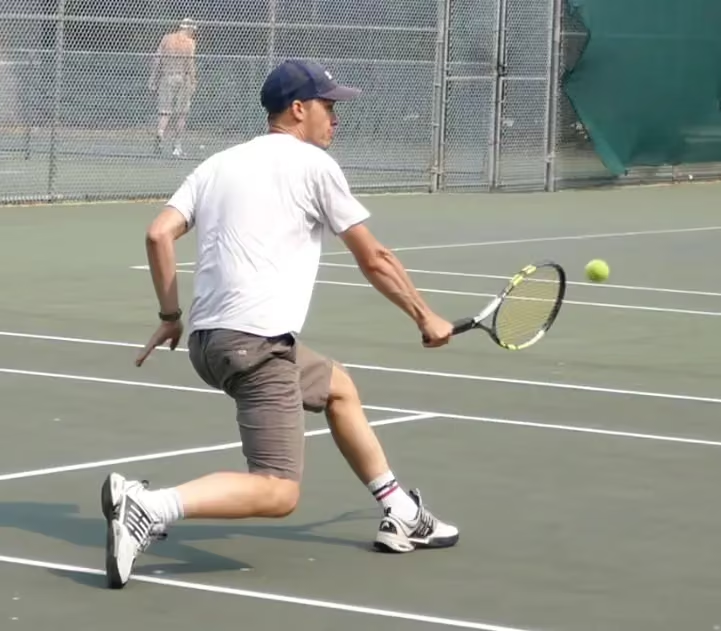
This experience drove me to tennis, a sport where the fight was entirely my own. I fell in love with it immediately. Tennis is a 50% physical battle and a 50% mental war waged primarily against yourself. I wasn’t especially gifted, but I developed an extreme resiliency. In tennis, it’s never over until it’s over; you have to earn the finish, as no timer will ever save you. It’s a mental threshold that many players can’t cross.
The last tournament I won, around age 16, perfectly captures this. I was playing a kid I knew: a superb player with a notoriously short fuse. He dominated the first set, and I was down 1-5, completely outmatched technically. But I didn’t give up or start thinking about the next set. I pivoted. It was my turn to serve, and from that moment until the end of the match, I committed to a service-volley on every single point, running to the net immediately. The sudden shift in strategy caused him to completely unravel. He lost his composure, and I won the first set 7-5. He was mentally gone.
After I won the tournament, a special spectator, my P.E. teacher from school came up to me and said something I’ll never forget: “I didn’t think you had that in you.” I may be quiet and introverted, but I am a fighter. This is the lesson tennis taught me, a lesson I’ve carried for the rest of my life: the core values of resiliency and combativity.
The Volume or 80/20
If you’ve made it this far, you might have noticed this isn’t a typical month of fitness plan. You’re damn right, it is my blog from the 2000s, just me recounting my life. Before diving into the specifics of each sport, I believe it’s crucial to explain why I’m drawn to them and the philosophy behind my training.
It was completely reshaped by a conversation with my good friend and colleague, Jordan Rapp. Jordan isn’t just a great engineer; he’s a world-class endurance athlete, the full package. My previous method was to dive down YouTube rabbit holes. But in the world of fitness content, it seems the price of getting attention is to constantly reinvent the wheel, repackaging old formulas into shiny new products while relentlessly pushing the latest supplement powder.
As a pro, Jordan words of wisdom are way more simple and straight to the point:
’’’ Arthur Lydiard knew how to properly train endurance athletes 80+ years ago. More is more. And the intensity is exponentially more load, so you generally want to prioritize volume over intensity.
American runners - and most recreational runners - tend to do easy days too hard and hard days too easy. So the 80/20 idea is - much like the Tim Ferris and similar “life hacks” around the same principle - that you do mostly easy stuff and then a bit of hard stuff. But 20% is likely still way too much if you are doing it right. More likely 5%. Maybe 7-8% at the limit. Most people benefit just from having structure and guidance. It’s having a plan. Not the specifics of the plan. ’’’
Beyond his eloquent prose, the core message is a simple, fundamental truth: volume is king. In today’s culture of quick fixes, that is not a marketable piece of advice. It’s not a 30-minute workout life hack. The real path to fitness requires doing the work, and more importantly, building the capacity to sustain that volume over the long term.
Running
Slow
Every previous attempt I made at running failed for the same reason: I couldn’t sustain the volume, so I never saw real improvement. I used to live in Vancouver, right next to the perfect 11km seaside loop in Stanley Park. But my approach was all wrong. I would push myself so hard on every run that the mere thought of the next one became intimidating, and my body would need three days to recover.
This is the classic trap: you feel sore and exhausted, so you assume it must have been a great workout, right? Absolutely not. That excessive recovery time meant I could never build volume, which led to stagnation. For me, stagnation is the ultimate motivation killer. While I managed some decent times in events like the Vancouver Sun Run 10k, I never truly progressed. To make matters worse, I developed serious migraines when I ran, which completely killed my will to continue. Interestingly, those headaches only disappeared after I lost 10kg in three months, though I’m not sure if the two are related.
The breakthrough came after Jordan’s comments prompted me to do more research. I began to understand the message hidden behind the noise of fitness influencers and discovered the concept of Zone 2 training. Whether Zone 2 is a scientifically perfect model doesn’t matter. What mattered is that it gave me a framework, a practical way to build volume by managing my effort, first with my watch’s heart monitor, and eventually by feel.
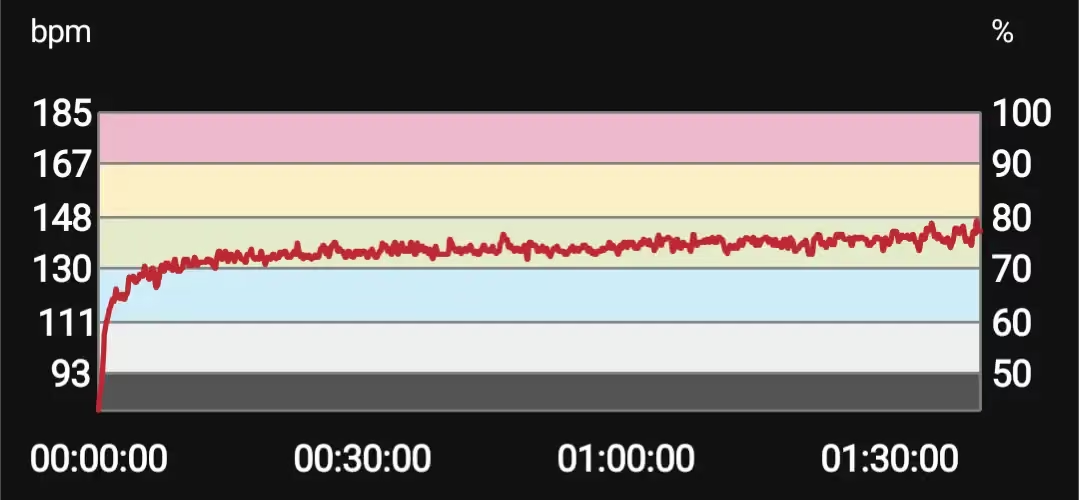 A perfectly controlled zone 2 workout on the treadmill
The results have been transformative. I now average over 30km of running every week, typically over three sessions. I’ve evolved from isolating high-intensity and Zone 2 days to combining them. A standard run for me now is 90 minutes: a solid hour of low-paced running to build my base, followed by 30 minutes of high-intensity work to finish strong. On easy days, I’ll stick to a steady 90 minutes in Zone 2.
For an extra challenge, I’ll trade the treadmill for my 10k loop outside. Running outdoors is more demanding and engages more muscles, but for now, the convenience of the treadmill fits my schedule perfectly. I admit I’m still a bit of a gym rat at heart.
Fast
I have two main high-intensity running workouts.
- Sprint Intervals: Done after a 1-hour Zone 2 run.
- 15 min tempo run (~160bpm HR).
- 2 min recovery jog.
- 2 min sprint (max HR).
- 2 min recovery jog.
- 2 min sprint (max HR).
- Cooldown.
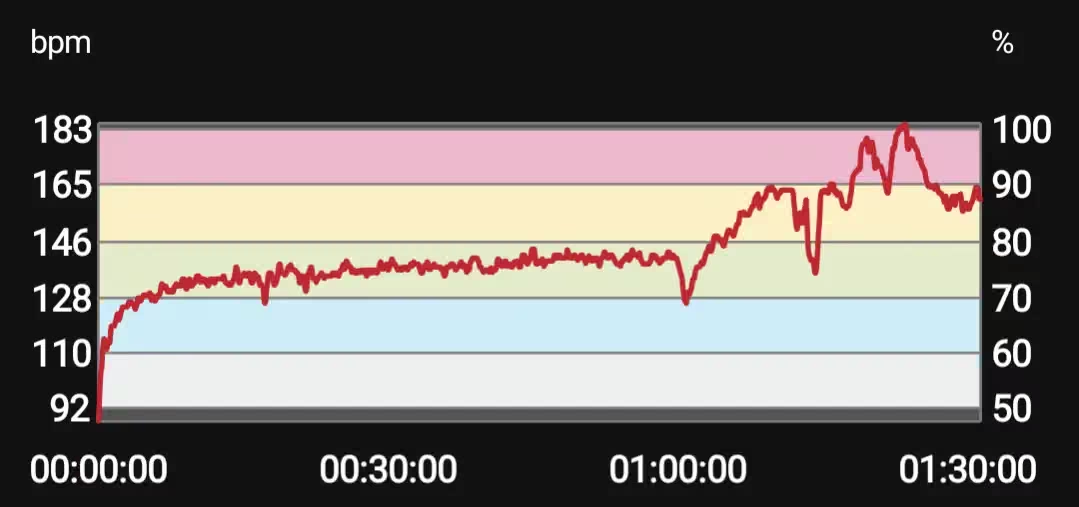 A good example of this first workout with a sprint at the end
- Hill Intervals: A workout composed of two blocks.
- Climb Block (A): 4 min @ 6% incline -> 1 min @ 9% incline -> 1 min sprint.
- Sprint Block (B): 1 min sprint / 40s rest -> 40s sprint / 30s rest -> 30s sprint.
- Total Session: Perform the sequence A, A, B, B, B, A, A. This is an extremely demanding workout.
Additionally, I incorporate small runs and walks into my daily routine, like running 1.5km to the gym, to maintain a baseline of activity.
Progress
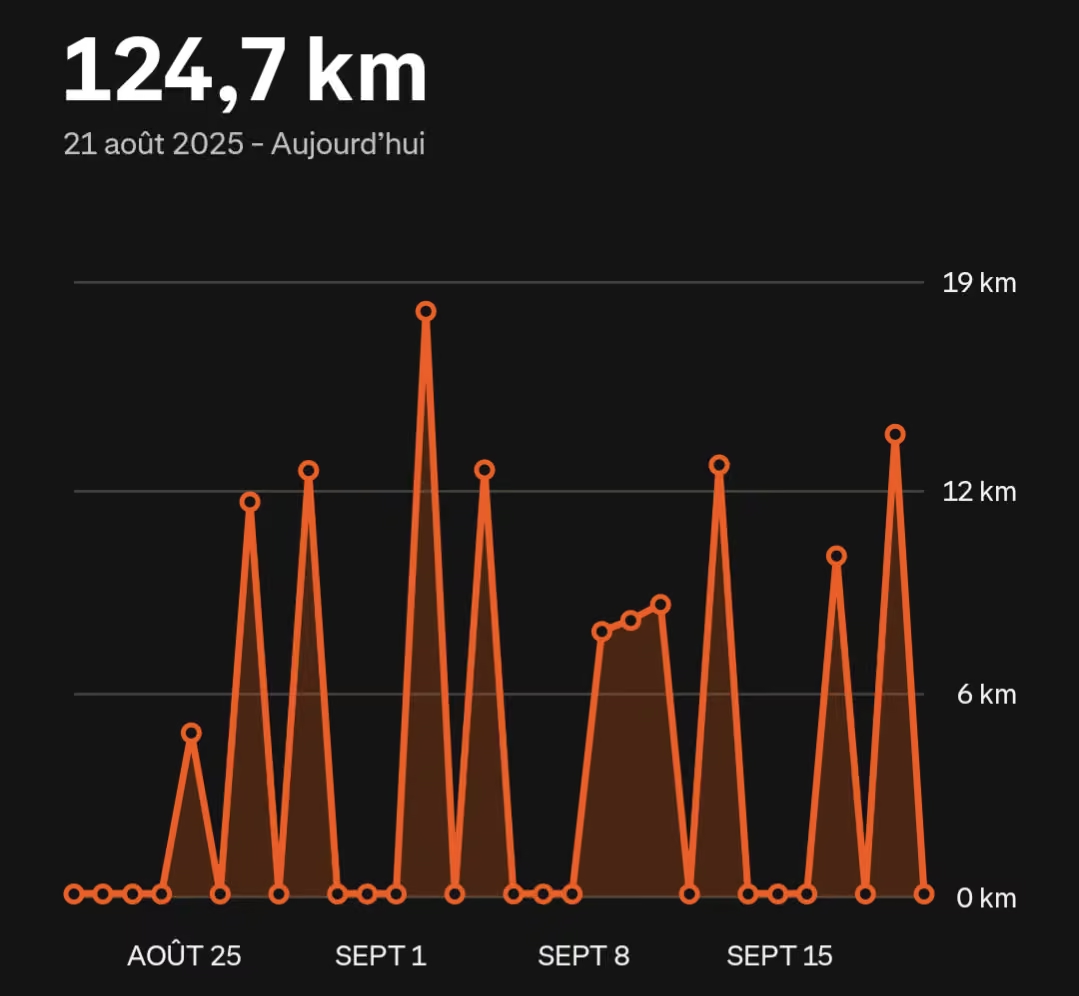 Little preview of my runs length
Progress in endurance running isn’t always measured in raw speed, but in efficiency. This morning was a perfect illustration of that. I ran for 1 hour and 40 minutes, my longest run to date, while keeping my heart rate locked in a stable 137-140 bpm range. Typically, over a long effort, your heart rate will drift upward even if your pace doesn’t. Today, my run was not only longer and more stable, but it was also my fastest at that controlled heart rate.
This links back to the mental fortitude so crucial in a sport like tennis. When you’re out there for over an hour, where does your mind go? For me, these runs are my therapy. Some people journal, some see a specialist, and some share everything with friends. My process is to turn inward and work through my thoughts. It’s where my mind goes to process the raw materials of life—pain, spite, and doubt and forge them into positive energy. I need that space to get bored, to allow for true introspection. That’s precisely why I never run with music or headphones.
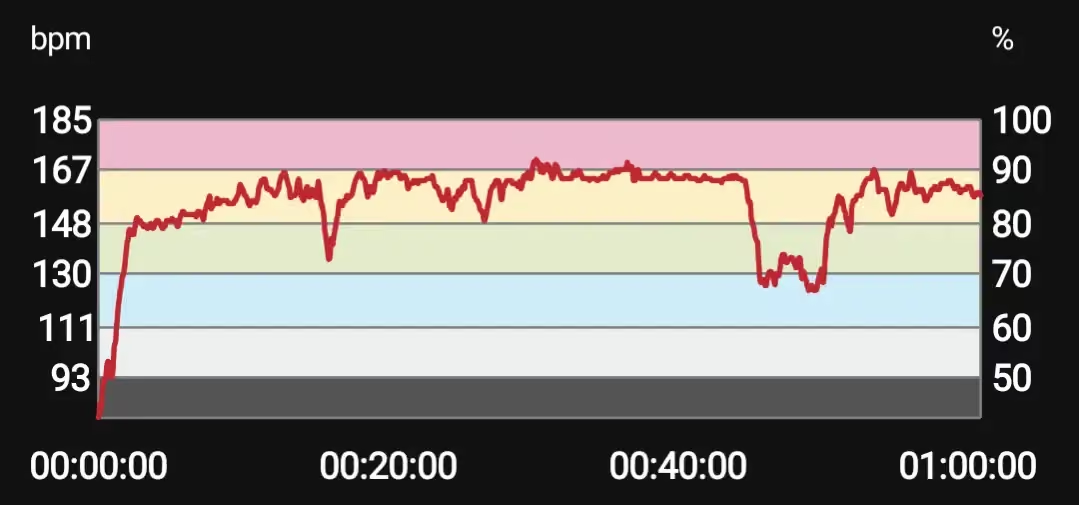 What an outdoor 10k looks like, racing
Swimming
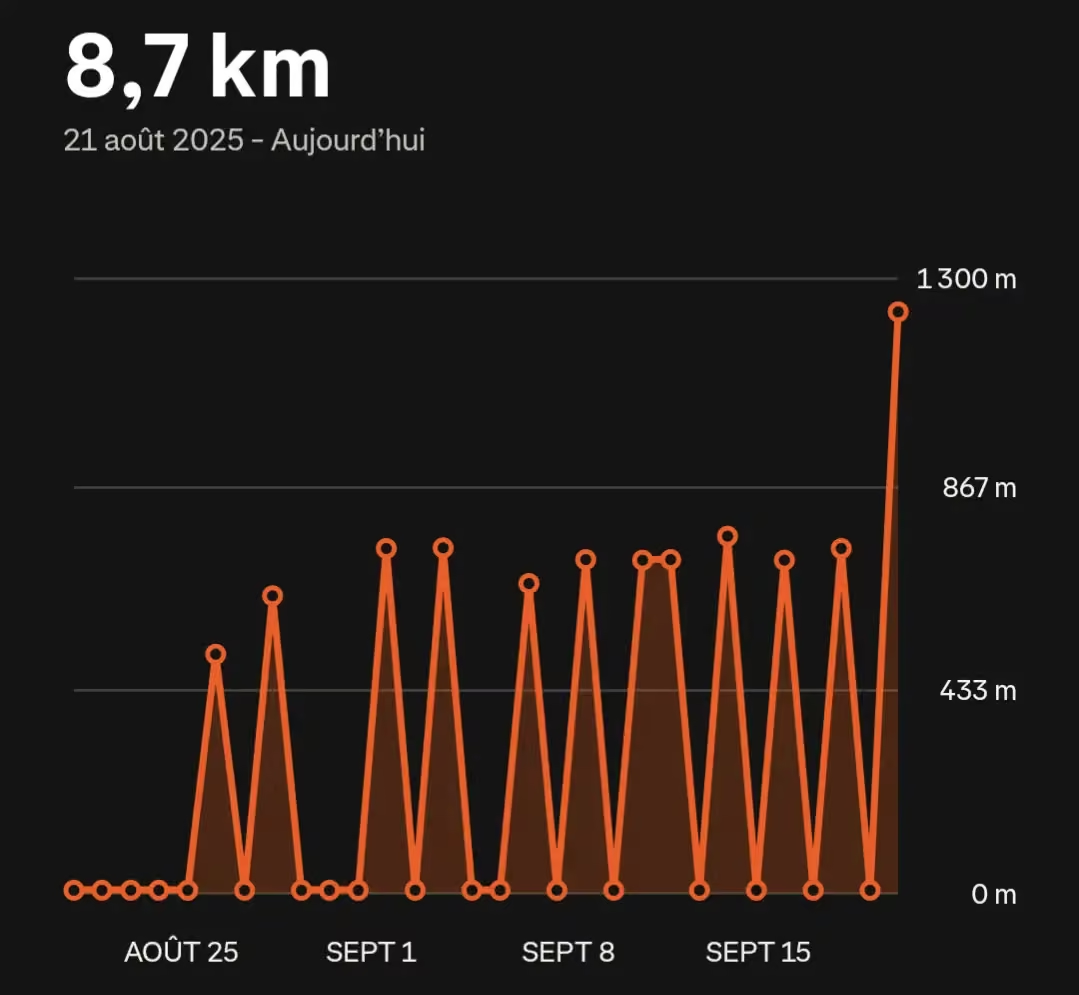 Finally finding the flow after a month from scratch
My relationship with water has always been complicated. To be honest, I never really swam before this month, largely due to chronic sinus issues that made being in the water miserable. That all changed when the least terrible PM I know brought value to this world, giving me a simple device called the Ancient Secrets Neti Pot. The name might be pretentious, but its effect, using a simple saline solution, was immediate. For the first time, I could prevent the headaches and the head pressure. It was life-changing and opened the door to the pool.
I was immediately humbled. I’m blown away by the level of skill required to swim well; it’s an intricate coordination of breathing, kicking, and the precise angle of your arms entering the water. In my first sessions, I couldn’t exhale properly, causing CO2 to build up in my blood. I’d finish a 50m lap completely breathless and unable to stand straight. It was brutal. A game-changing tip came from my good friend Ravi, who taught me a simple breathing exercise called Bobbing, which I now do between sets.
Finding the right resources for a true beginner was tough. Most online programs assume you can already swim a fair distance (+1000m). The breakthrough came with Swim Dojo’s 10-workout plan for ultra noobs. It was perfectly paced and allowed me to progress from barely surviving 500m to comfortably swimming 1200m. Now, swimming has become a ritual. It’s the sport that currently requires the most motivation, so I go early in the morning to have the pool for myself. A cold shower beforehand gets me ready. While the initial push is hard, after about ten sessions, I learned how to find a state of flow where it feels like I could swim forever. It’s an incredible feeling.
A final, crucial piece of my kit is a Polar Ignite 2019 sport watch my dad gave me from his retirement party. It’s an excellent tool that automatically tracks my distance and rest times, which helps immensely in planning and executing workouts. It’s a huge step up from my more recent Fitbit, which has a less precise heart rate monitor and tracks fewer activities. It’s a challenging journey, but I’m having a lot of fun getting better. And I won’t deny it, my body looks amazing after a good swim pump.
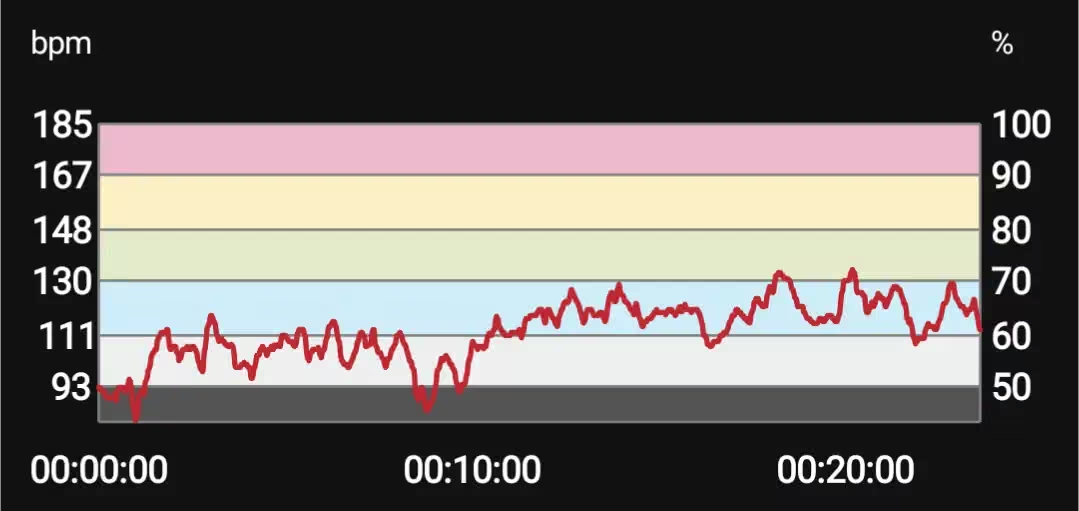 When I struggled to finish, needing a lot of rest, looks like strength training, 600m training
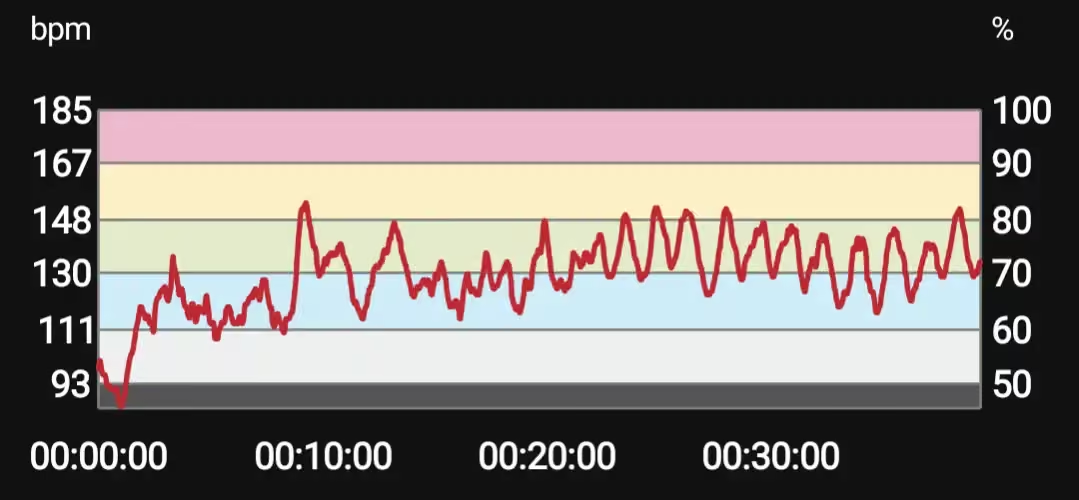 Finding the flow, bpm is raising, 1200m training
Biking
For the triathlon dream to come together, biking is the next piece of the puzzle. Right now, I’m just hammering it out on an indoor bike once a week, but I’m getting ready to dive in deeper. I’m thinking of grabbing an entry-level bike and setting it up with Zwift.
The epic goal, thanks to my good buddy Sam Pavlovic who want us to take on the Taiwan KOM Challenge. Here we come Taiwan! That said, I’m taking it one step at a time. My training schedule is already packed, so adding another sport would be very challenging.
Upper Body
My training routine extends beyond swimming. In the afternoon, I focus on building strength, usually with a mix of dumbbell and kettlebell exercises. I’ve found Google Gemini to be an amazing tool for creating on the fly workouts based on the time I have available. If you haven’t tried kettlebell, I highly recommend. It is a super fun dynamic exercice mobilizing all your body.
I try to split my days, with swimming or running in the morning and upper body work or climbing in the afternoon. The goal is to climb twice a week. I do not stick to it very closely. The most crucial part of my philosophy is listening to my body. The moment I feel overworked or notice any pain, I take a guilt-free day off. Right now, that averages about one rest day a week, but that day floats to wherever I need it most. I know having any kind of injury would kill all my motivation.
Yoga
I’ve made a daily 15 minute Yoga routine and essential part of my fitness. I made a point to never skip. The specific routine I follow is always the same: routine. The consistency of doing it every morning, is a major factor in my ability to handle high volume of training, especially for my upper body which is my weakest area. The routine effectively relaxes my shoulders and back. It also trains my abs with some push ups and planks.
Nutrition
I mentioned losing 10 kg by counting my calories and following the macros. I have an app for this, it does not really matter, to lose weight you need to eat less in a way you can sustain like changing the type of food you eat or just diminishing the portion. For me it is about pleasure, so I prefer fasting a bit and eat a big meal than reducing everything.
Just 2 graphs to demonstrate:
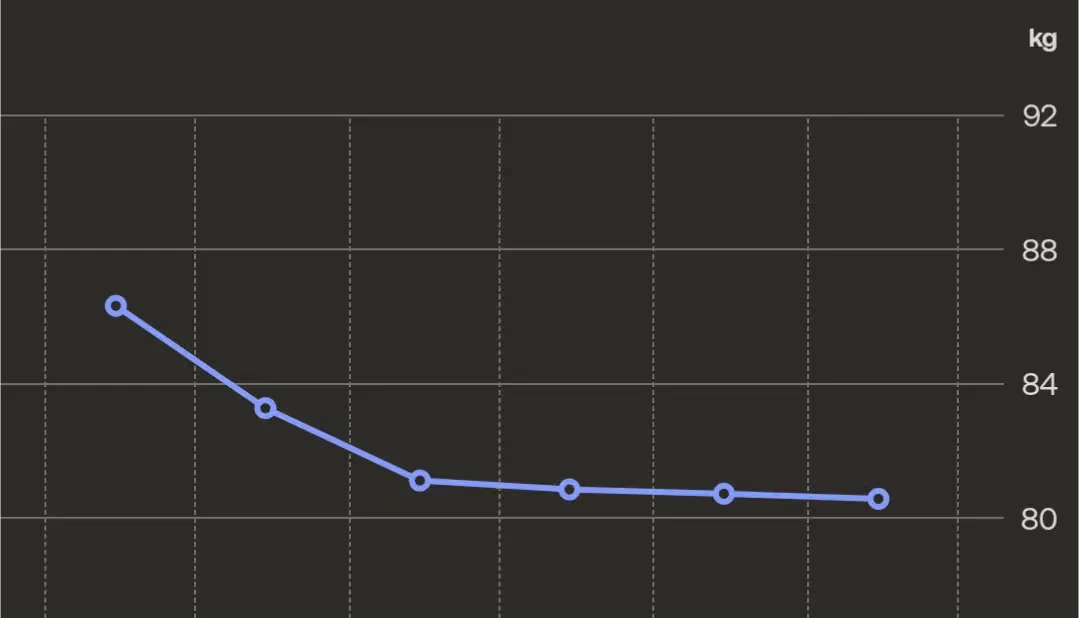 Losing weight fast but then maintaining around 80kg, to build muscle and strength
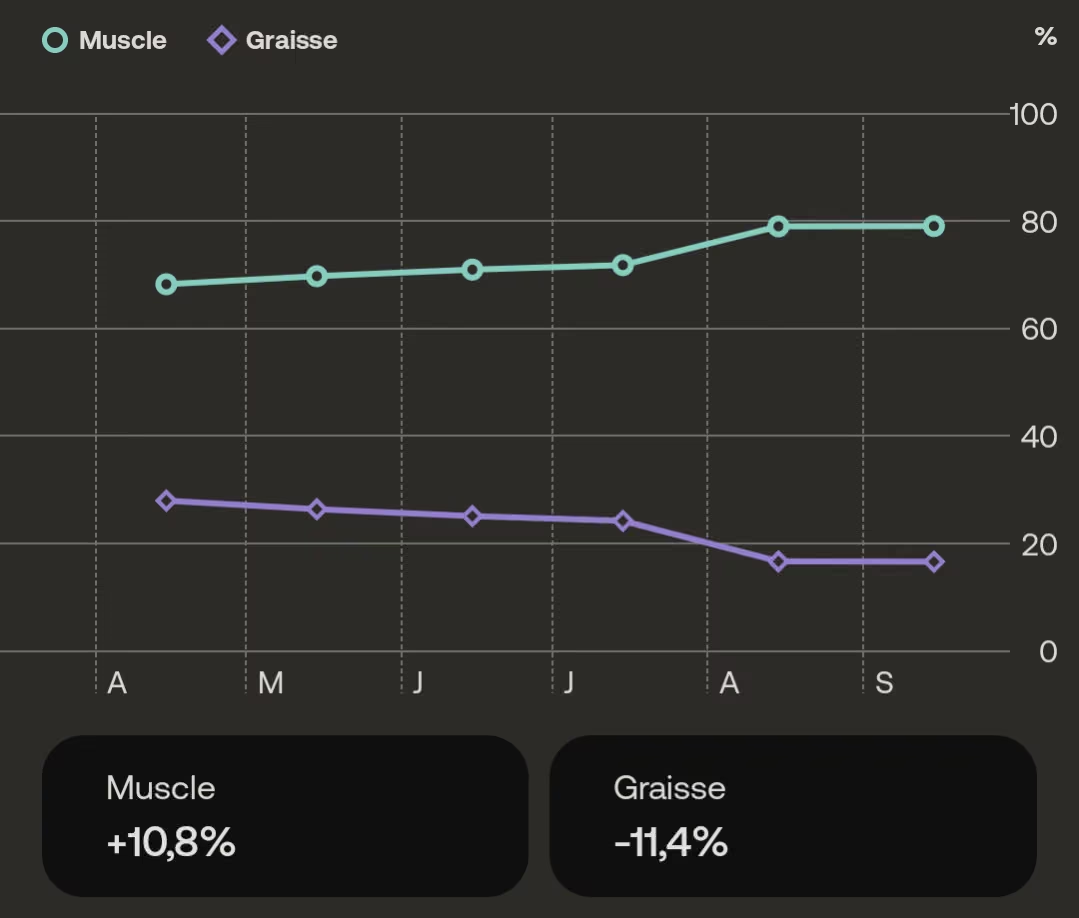 Progress building muscle while losing fat
Conclusion
I am seeing tangible changes in my body. My strength and mental clarity are getting better. Doing sport is an excellent way to fight depression and inertia. After a good workout, there is a definite sense of accomplishment. It quiets the weight and the dread of life, which often comes from the fear of not being good enough. This newfound routine, build upon my mental resiliency helps me to navigate those difficult times.
As a next step, I’ve registered for Run Malibu. It is a 5k race followed by a half-marathon over two days. I will give it all, always.