Why the Tatung Is the Best Rice Cooker
~8 min read
Jump to end ↓
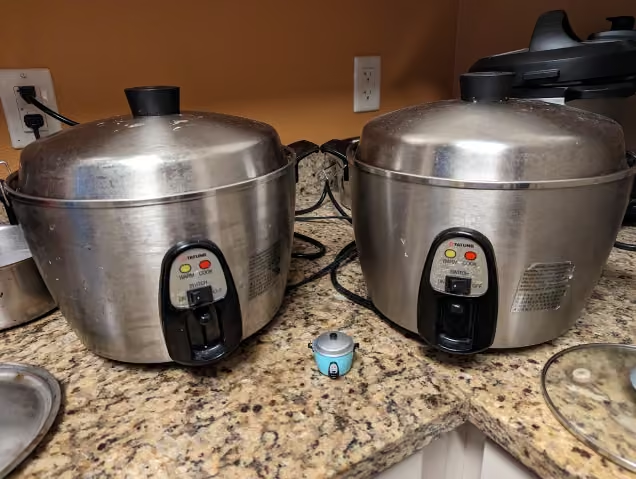
Everyone talks about Asian rice cookers: Zojirushi and Tiger from Japan, Cuckoo from Korea. But the real story comes from Taiwan: the Tatung rice cooker, nimble, but indestructible.
History
The electric rice cooker is a Japanese invention of the late 50s. Toshiba started selling the ER-4 in 1955. Taiwanese manufacturers quickly reverse-engineered the design, it was not patented. Before those devices, households had to babysit a pot over coal or wood for hours. The electric cooker freed people, mostly women, from the chore. It spread rapidly. Taiwanese designs then evolved, optimizing for steam cooking and energy efficiency. At the time, the Island was facing a severe shortage of electricity, so power efficiency was critical for the consumer.
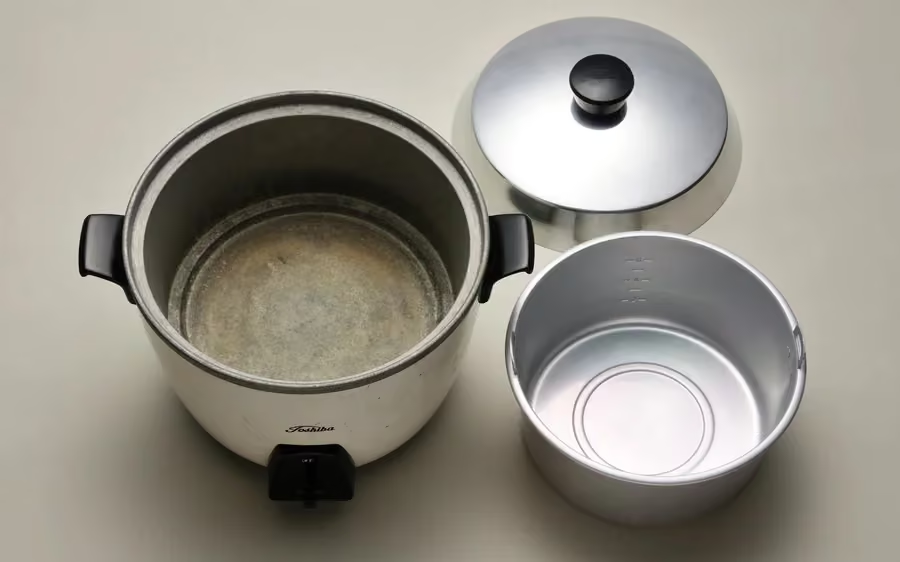 Toshiba ER-4, the Tatung looks externally the same, Toshiba Museum
There is a lot to say about the industrial strategies of the Four Tigers that drove exceptional growth for more than 40 years. And the momentum continues: Taiwan’s GDP per capita passed the UK’s this month, powered by its semi-conductor industry. Taiwan and Korea are particularly interesting in the same way; both of those countries elites were heavily influenced by Japan.
Out of this ecosystem grew Tatung, one of those sprawling Asian conglomerates that produce everything from heavy machinery to TVs and consumer electronics. In the 1960s, it outlasted its competitors thanks to a well-established manufacturing base, funded in part by the United States, which supported Tatung’s factories to build electric fans and watches for Toshiba itself.
This is why this rice cooker is such a strong cultural marker. Tatung is emblematic of Taiwan’s post-war transformation to an industrial powerhouse, from handmade goods to mass production. Every household has one.
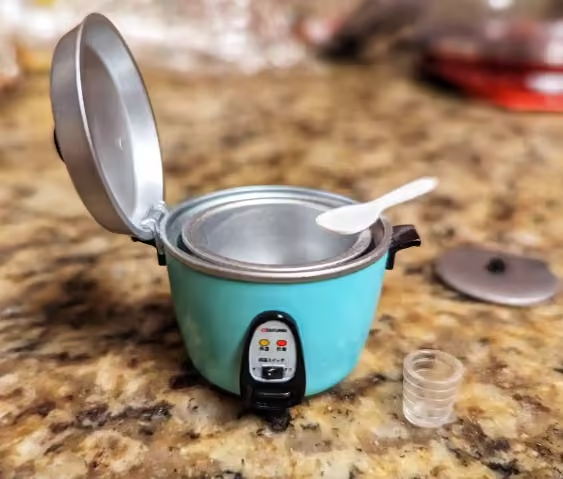 My gachapon (扭蛋) Taiwan night market prize: a tiny Japanese replica.
How It Works
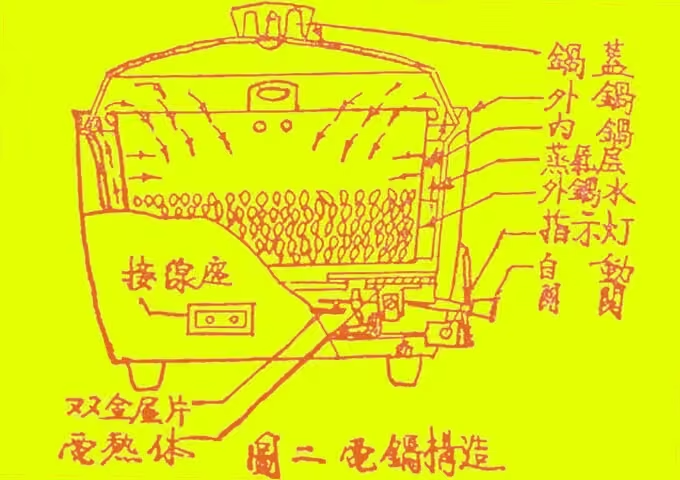 Tatung schematics from 1963. You can see the steam going up on the side to go in the inner pot
A Tatung rice cooker has two main parts: the body, which contains the heating element at the bottom, and the inner pot, a heavy metal bowl where you put the rice and water.
Here is the clever part: you pour water into the tray of the main body, underneath the pot. So the rice cooker works from two directions at once:
- From below: the heating element boils the water in the body, which heats up the bottom of the inner pot.
- From above: that same boiling water turns to steam, rises up, and cooks the rice from the top.
The rice is simultaneously boiled and steamed. Because of this, you can also use the rice cooker as a steamer. It is called indirect heating.
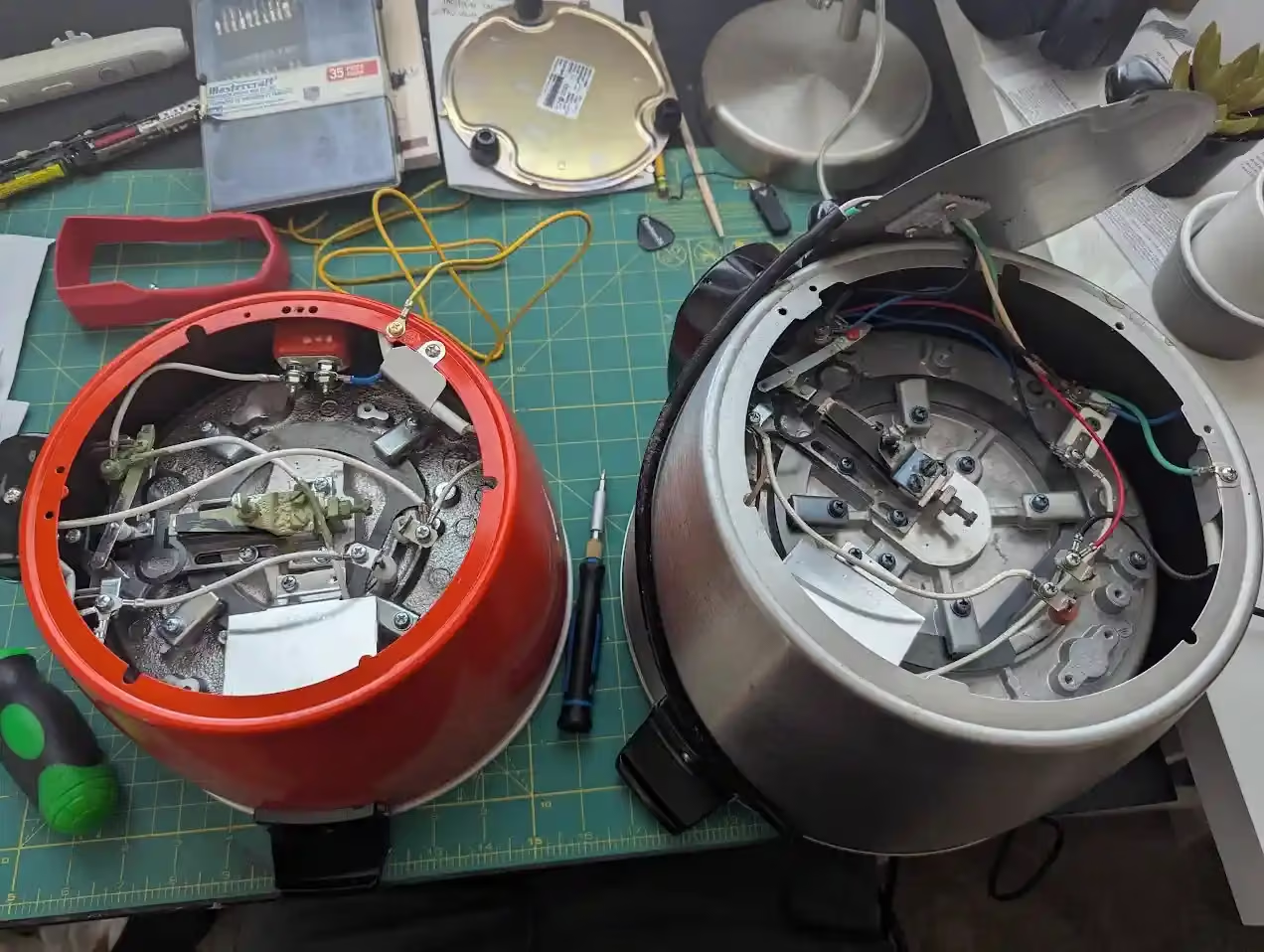 Exposing the wires of my cookers
I bought my first one used. I loved it so much I gifted one to my parents in France. I had to import it from Singapore because of the 220V (Taiwan runs on 110V like the United States). I had to repair a few but it is really not a hassle. Compared to the Japanese brands mentioned earlier, a Tatung has absolutely no electronics inside. It is as simple as it can get.
Let me entertain you with some ASCII art.
- Press the main lever
- Bimetal switch closes
- Indicator lamp lights up
- Heater in the tray starts boiling
- Water evaporates
- Pot hits 105 °C
- Bimetal loses Curie temperature, opens
- Spring releases, lever pops up
- Electric circuit opens, heater stops
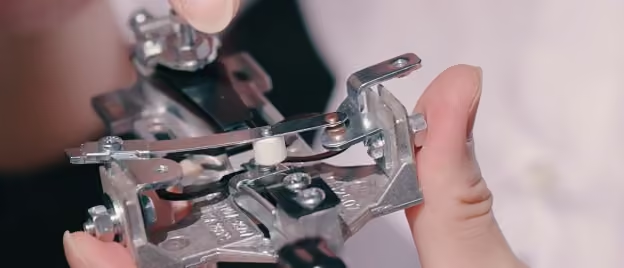 The thin metal band from left to right is the switch. You can see the contact on the right with the copper colored endings.
Let me explain the Curie temperature. The switch is a magnet. When you press the lever, it adheres to the other contact and stays closed because the magnet is holding it shut. The electric circuit closes, the heater activates, and it starts boiling the water. Here is the physics: water boils at 100 °C, so the metal cannot exceed that temperature as long as there is still water left; the energy goes into turning water into steam. When all the water is gone, nothing prevents the metal from going to billion of degrees. Nothing? No, our little magnet has a Curie temperature of 105 °C. As soon as the metal reaches 105 °C, the magnet loses all its magnetic power. A tiny spring does the rest: the switch snaps open and the whole system shuts down. Pure physics. No timers, no sensors, no electronics. An elegant design that is nearly impossible to break.
The temperature I used for example are not exactly correct. I saw a Tatung engineer describes the temperature at the switch being between 180-200 °C which makes sense (it is in the casing, not directly against the water). The concept stays the same.
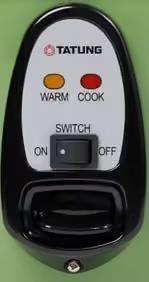
On this panel, you can see on the right side, the red light indicating if the machine is heating. The switch that activates the bimetal is the bottom lever. When the bimetal opens, this lever goes up automatically with a spring. It produces the signature click of this rice cooker. No need to get a ring-tone of any sort to know the cooking is done.
I omitted from the schema the On/Off button. On most Tatung models, it engages a lower-wattage heating element to keep the rice warm after cooking is done. In Taiwan, people typically cook a big batch and let the cooker keep it warm all day, rather than cooking fresh rice for each meal.
The 3D
You know me, I am a bit of a show-off (btw). I spent this week perfecting my 3d skills. I am pretty proud of this one, particularly the texturing work. On top, I integrated a little 3D viewer for the blog.
Now let me show you some render so you do not leave this page with the impression I am not very good (and you may be right).
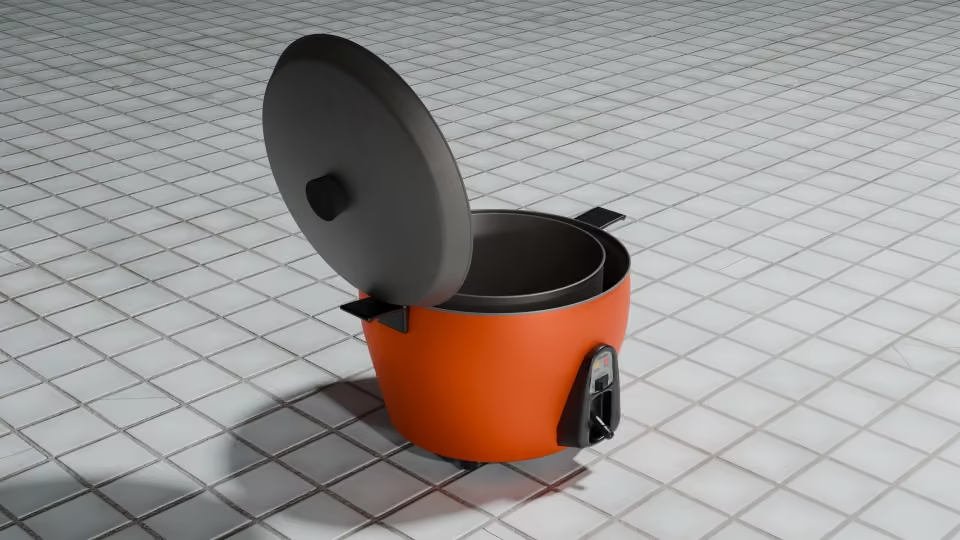 Better lighting
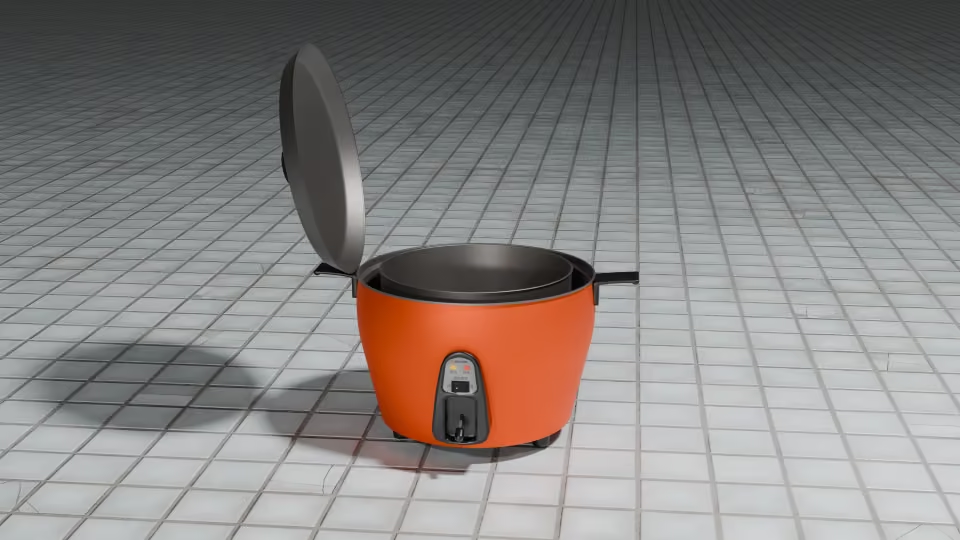
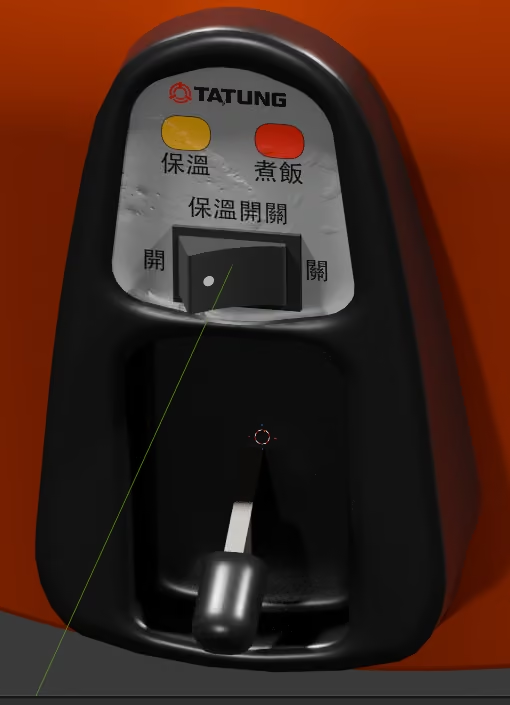 Appreciate the work on the plastic, the writing
More
I recommend buying a Tatung rice cooker. I hope you will fall in love with it as much as I did with mine. Here are some links to appreciate this heritage even more.
-
If you are interested in knowing more about the origin story, this fantastic article goes more in depth.
-
Taiwan Plus did an excellent video also going over the history of the rice cooker.
-
Online store where you can buy your very own Tatung with all the accessories in the US.
-
Some recipes from Reddit