Pogne de Romans
~4 min read
Jump to end ↓
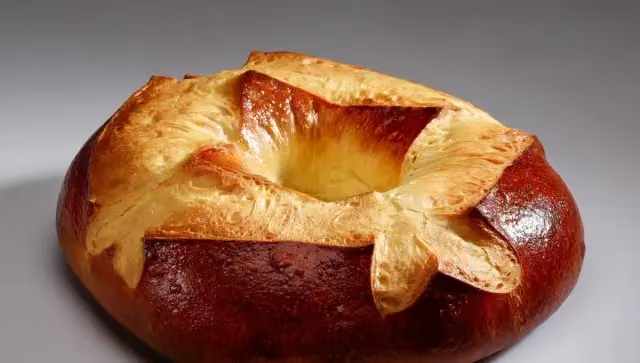
Easter has come and gone. In my hometown, it is the tradition to eat a special pastry called La Pogne.
My hometown, Romans-sur-Isère (usually abbreviated to Romans), was founded around the 800s. It was named in honor of the Romans… maybe. No one really knows for sure. Romans is part of the Dauphiné, a region that is beautiful in its own right. My town has a lot of peculiar and specific culinary specialties, but today we are going to speak about La Pogne.
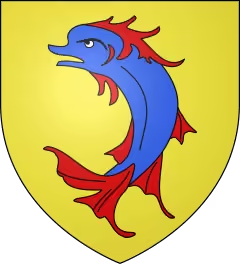 Dauphiné: it would be hard to find cooler heraldry.
Lent in the Catholic faith is a period of fasting lasting roughly 40 days. Historically, it was forbidden to consume eggs in the Dauphiné during Lent. This was not specific to my region, but common to most of Christendom. The clergy would allow only one meal per day, and eggs were strictly off-limits.
Because of this, eggs would pile up throughout the spring. People had to find innovative ways to consume this massive excess of eggs once Lent ended. This is how the tradition of Easter eggs was born; people would decorate the surplus eggs that had accumulated. In Romans, the solution was more delicious: we put them all into bread dough.
When Lent concluded and Easter began, people celebrated by adding a surplus of eggs into their bread mix. They then elevated the flavor with sugar and orange blossom water. This fragrant addition is really what made the pastry famous and specific to my hometown.
I have a recipe that is pretty tightly locked down: the fruit of extended research and experimentation. It is based on my mom’s recipe, with some personal tweaks. I feel obligated to let you know that my mom was always a terrible cook; my dad was the chef in our house. It is certainly because of her that my favorite dishes are couscous and battered fish (staples of her university days). But there is one thing she continued to do again and again, relentlessly bringing it to every family reunion: the pogne.
 My good friend Beau made a pogne for my parents while they were visiting Canada.
Recipe
For roughly 6 people.
The Starter:
- 150g flour
- 10g baker’s yeast OR 4g dry industrial yeast
- 60ml water
The Pogne:
- 300g flour
- 80g butter (softened)
- 90g sugar
- 3 eggs + 1 egg white (keep the last yolk for an egg wash to get that golden look)
- 70ml Orange Blossom water (If you can’t find high-quality blossom water in North America, replace it with any scent you like)
Mixing
- Prepare the starter: Mix the flour, yeast, and water.
- First Rest: Let it rest under a wet towel for 8 to 10 hours.
- The Dough: After the rest period, mix the sugar, flour, and softened butter in a large bowl.
- Combine: Add the eggs, orange blossom flavoring, and then incorporate the starter.
- Knead: Form a ball (like bread). Add some flour because it will be very sticky, but be careful: the more flour you add, the less soft the pastry will be. Knead until smooth.
- Second Rest: Let the dough rise in a warm spot for at least 2 to 3 hours (it should double in size).
- Bake: Brush with the reserved egg yolk. Bake at 180°C (350°F) for approximately 40 minutes.
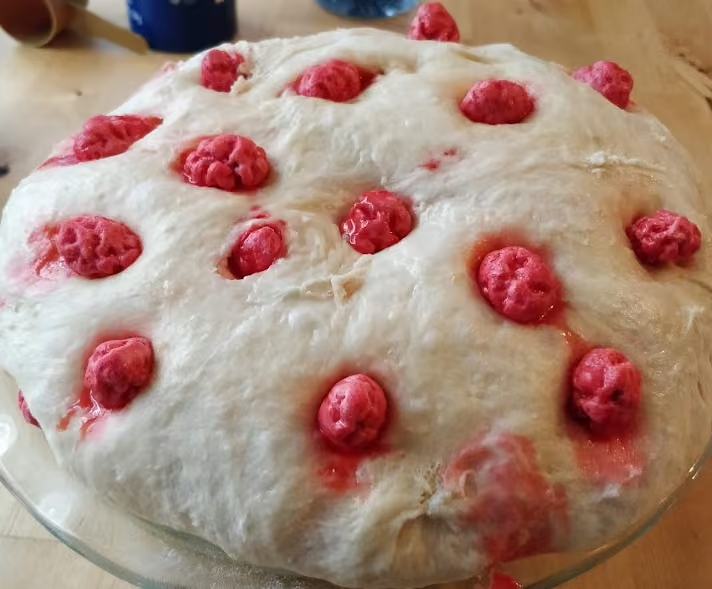 A pogne variant before the oven.
Outcome
If you mess it up, the result will be hard enough to use as bricks for a new house! Otherwise, it is delicious at any time of the day.
There is also a famous variant called the St. Genix. It uses a nearly identical recipe, but you add pralines to it. There are many local variations, from Lyon to Savoie, and the name can mean different things depending on where you are in France. A praline is an almond coated in red cooked sugar. Usually, when my family visits me, they bring some from home so I always have a stock.
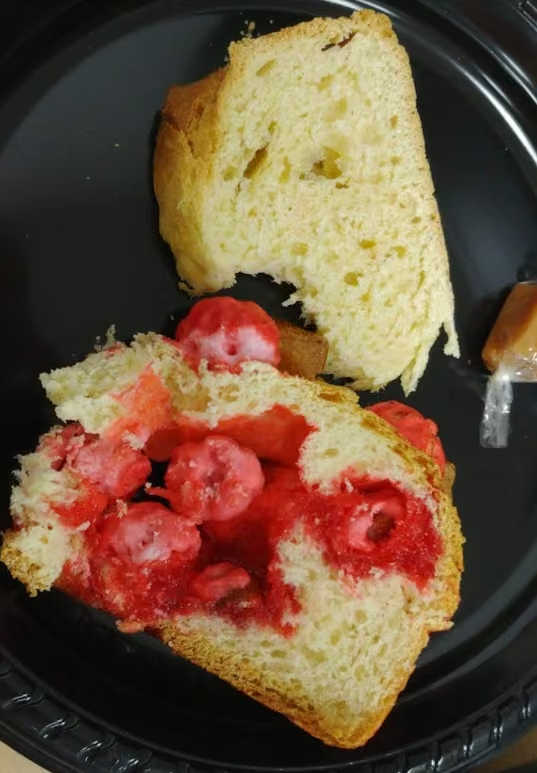 The pralines melt and create this beautiful red marbling.
As a final word of caution: never tell someone from Romans that you are eating a “Brioche” instead of a “Pogne.”
It is a terrible faux-pas! I hope you enjoy it and give it a try!